
A few other people recommended a carburetor man in Sicklerville, New Jersey, about 30 minutes south of Philadelphia towards Atlantic City. Racing Carburetors isn’t a huge operation with multiple bays of people running around with NASCAR parts. No, it’s a guy named Pat working from an incredibly-tidy garage behind his house.
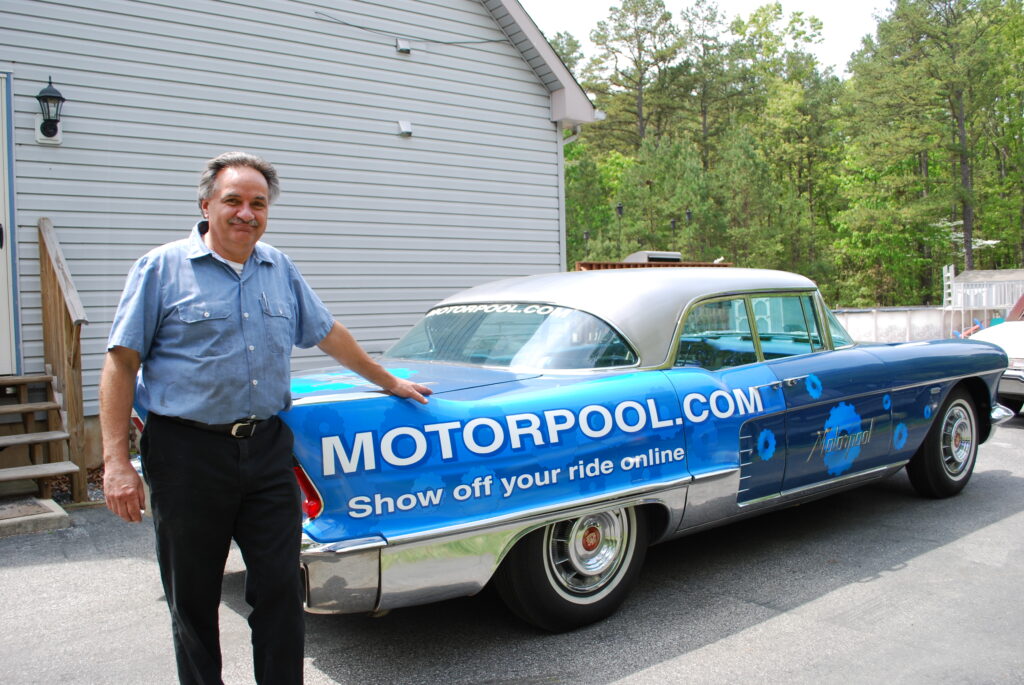
I wasn’t surprised–many specialists work in far more humble settings. So Pat takes a look at the tri-power on the 1958 Cadillac, often called a “six pack” by people back in the day. I tell him the crack theory and proudly show him my replacement base casting from Palacio Carburetors.
“Huh,” Pat said, as he looked at the side of my center carb, “I can’t imagine that’s cracked, but there’s a way to test it.” With the Cadillac running, he shot some carb cleaner in the center carb. It stumbled. Then he shot some carb cleaner on the “crack.” Nothing. He did it again. Still nothing. “That’s not a crack. That’s a scratch. It’s not your problem.”
So much for Frank.
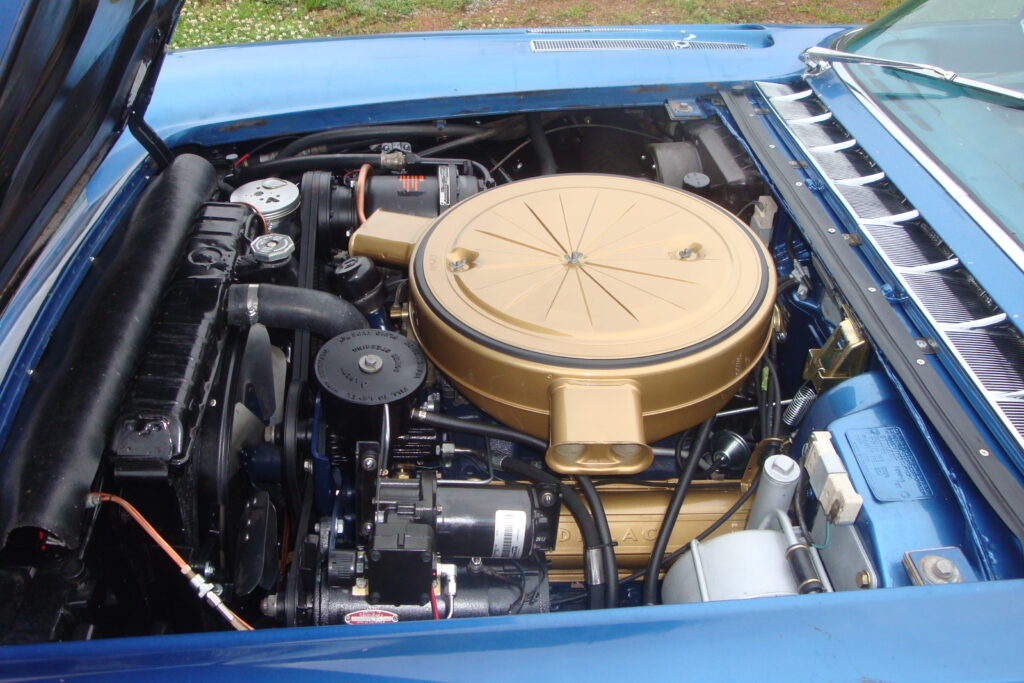
Pat began taking off my center carburetor so fast that I was convinced he either a.) had no idea what he was doing or b.) was some kind of carburetor GOD and would cure what ailed me for sure. I began taking pictures of the carbs just to make sure I could put them back together in case Pat was a crazy crank.
I needn’t have worried. Within 10 minutes, Pat had disassembled the carb, adjusted the float, replaced the jets, fixed the needle and seat, reassembled the whole lot and reinstalled the device on the car. Voila.
The thing still wouldn’t run.
“Fuel delivery,” Pat said. So I explained how the Brougham originally had an in-tank fuel pump (ahead of its time), and how I’d had that fuel pump rebuilt when I refurbished the gas tank. Unfortunately, it hadn’t worked right back in Birmingham, so we added a small, in-line electric fuel pump. I turned on the key. We couldn’t hear the pump. So Pat removed the old fuel pump and tested it: nothing. Not even a dribble. “But how could I have driven 70 mph down here to see you with no fuel pump?” I asked.
Pat speculated that the vacuum from the engine pulled the gas from the tank and that when I was at idle, it wasn’t strong enough to do so, causing the car to stall. Seemed like a plausible theory to me. “And besides,” Pat said, “this fuel pump is junk. I wouldn’t run my lawnmower off of this pump. We’ll get you a really stout pump.”
Off to the parts store and $140 later we had a Carter p4070. Another hour and Pat had that sucker installed and pumping away quietly in the rear. A couple of test drives around the block and I was nearly ready to go. No more dying at idle. No more stumbling. Lots of additional power. Finally! I was about to pull out of the driveway and . . .suddenly, the Brougham shot gas everywhere from the front carburetor. “What they hey?” Pat wondered. He quickly removed the front carb. Full of small, rust-looking trash. Horrors. He cleaned it, reassembled, and put it back on the car. Everything ran beautifully for two minutes, then Old Faithful shot up another geyser of gas. He removed the front carb and all the fuel lines again. Ten more minutes go by. Reassemble. Old Faithful shoots gas onto the windshield.
Pat puts a pressure gauge on the fuel line. The pump, which is supposed to deliver 5 psi, is spiking the gauge at 15 psi. So Pat installs a regulator to control the pressure, which does the trick and has the car running like a champ. All is well and we go for a test drive. The car performs even better than before, running like a Cadillac should. Except that the generator light keeps coming on. Hmm.
“Keep an eye on that generator light,” Pat tells me as I’m about to pull out of his driveway. “If it continues, you might want to have that voltage regulator checked.” Huh. I just had the generator rebuilt and the voltage regulator replaced by the masters of the electrical universe, Southern Armature. “I sure will,” I assured Pat. I turned the key to crank up and leave and then heard clicks. The car wouldn’t turn over.
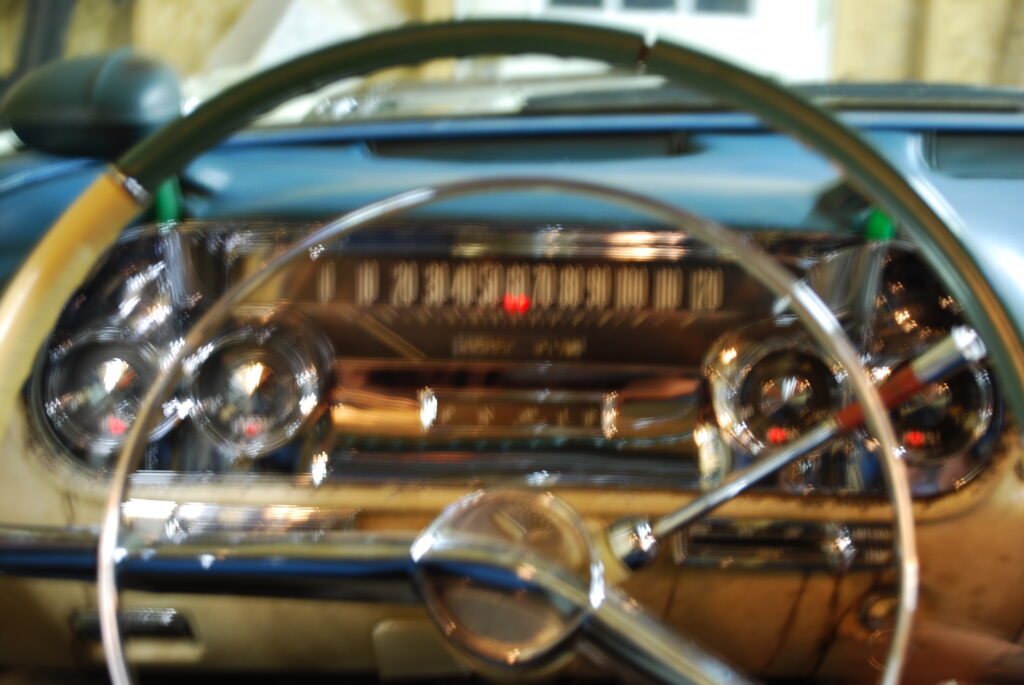
Two more hours, four calls to Southern Armature, and one battery charge later, I was stuck in Sicklerville with a deadville voltage regulator.
I’ve always said, when dealing with old cars, it’s best to develop a Zen-like “State of Fin.” Pat invited me to his son’s Little League baseball game, which I happily accepted. Three hotdogs and a plate of nachos (with that plastic cheese) did much to settle my nerves, and I settled in to enjoy the game–which our team won, 17 to 1.